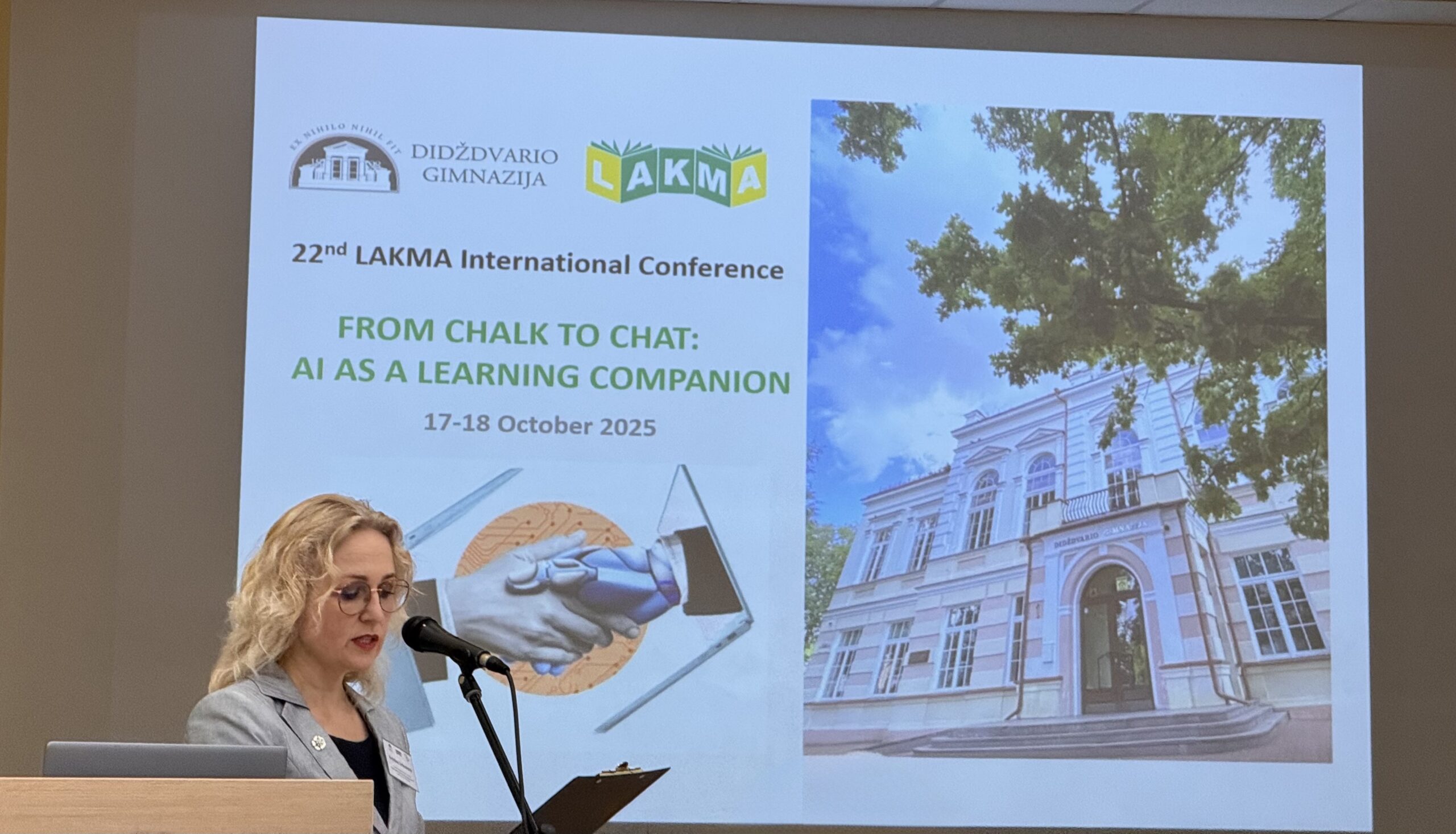
On October 17–18, the Lithuanian Association of Teachers of English (LAKMA), in collaboration with Šiauliai Didždvaris Gymnasium, organized the 22nd International Conference of the Lithuanian Association of English Teachers titled “From Chalk to Chat: AI as a Learning Companion.” The event brought together nearly one hundred English language teachers, researchers, and technology experts from Lithuania, Ireland, Bulgaria, Greece, Latvia, Poland, Serbia, Spain, the United Kingdom, and the United States to exchange insights on the use of artificial intelligence (AI) in education, as well as to discuss its opportunities and challenges.
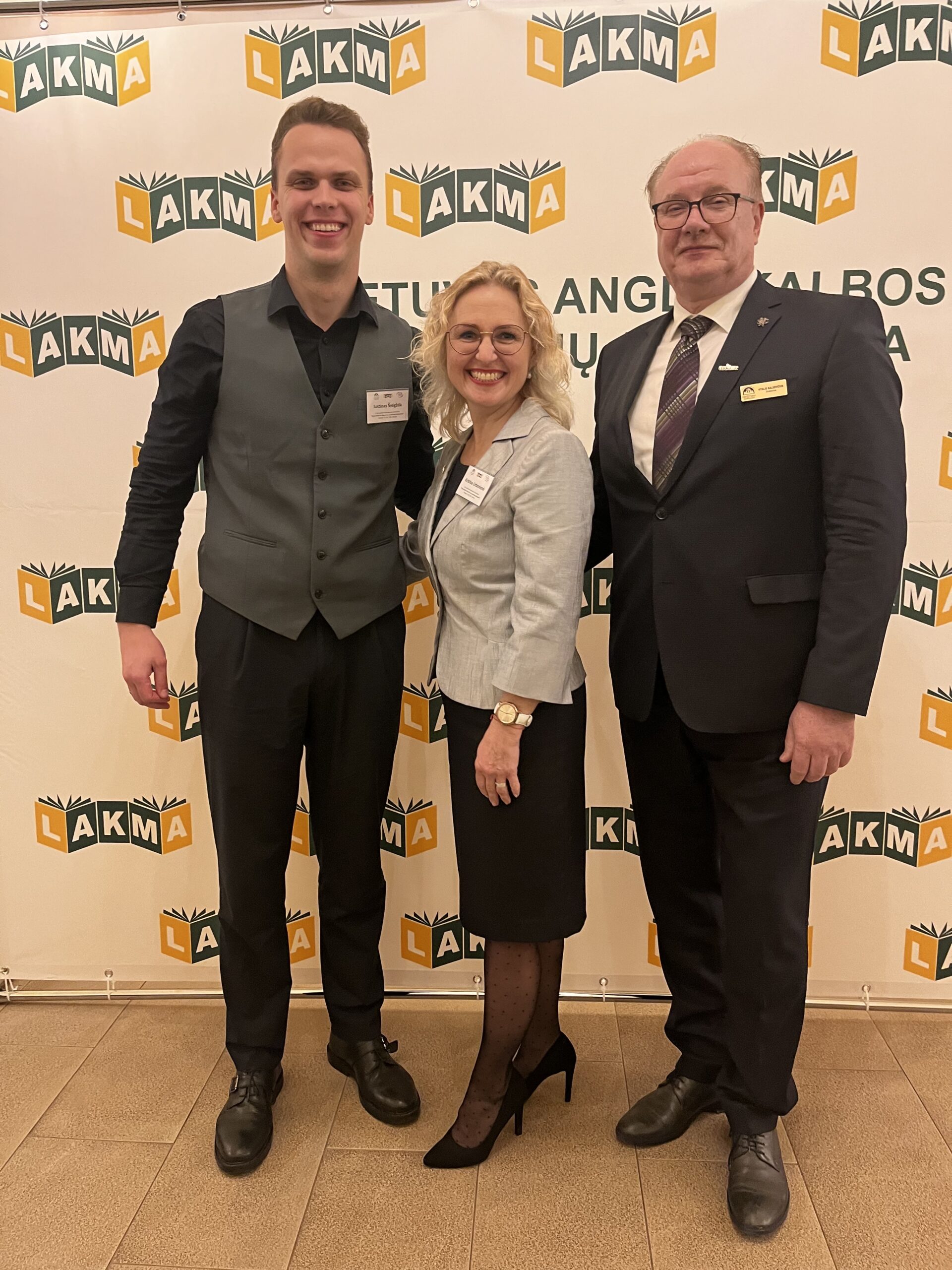
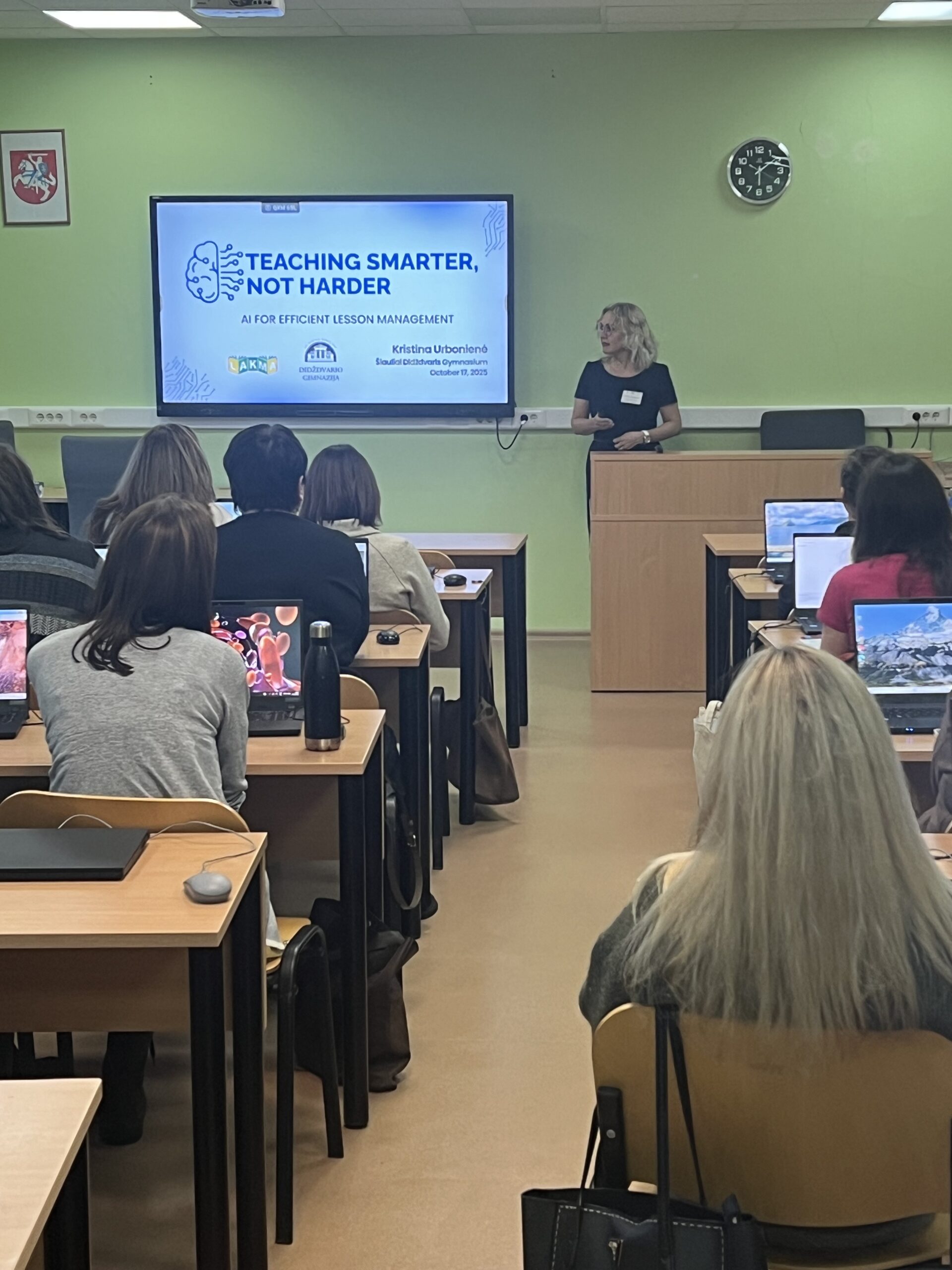
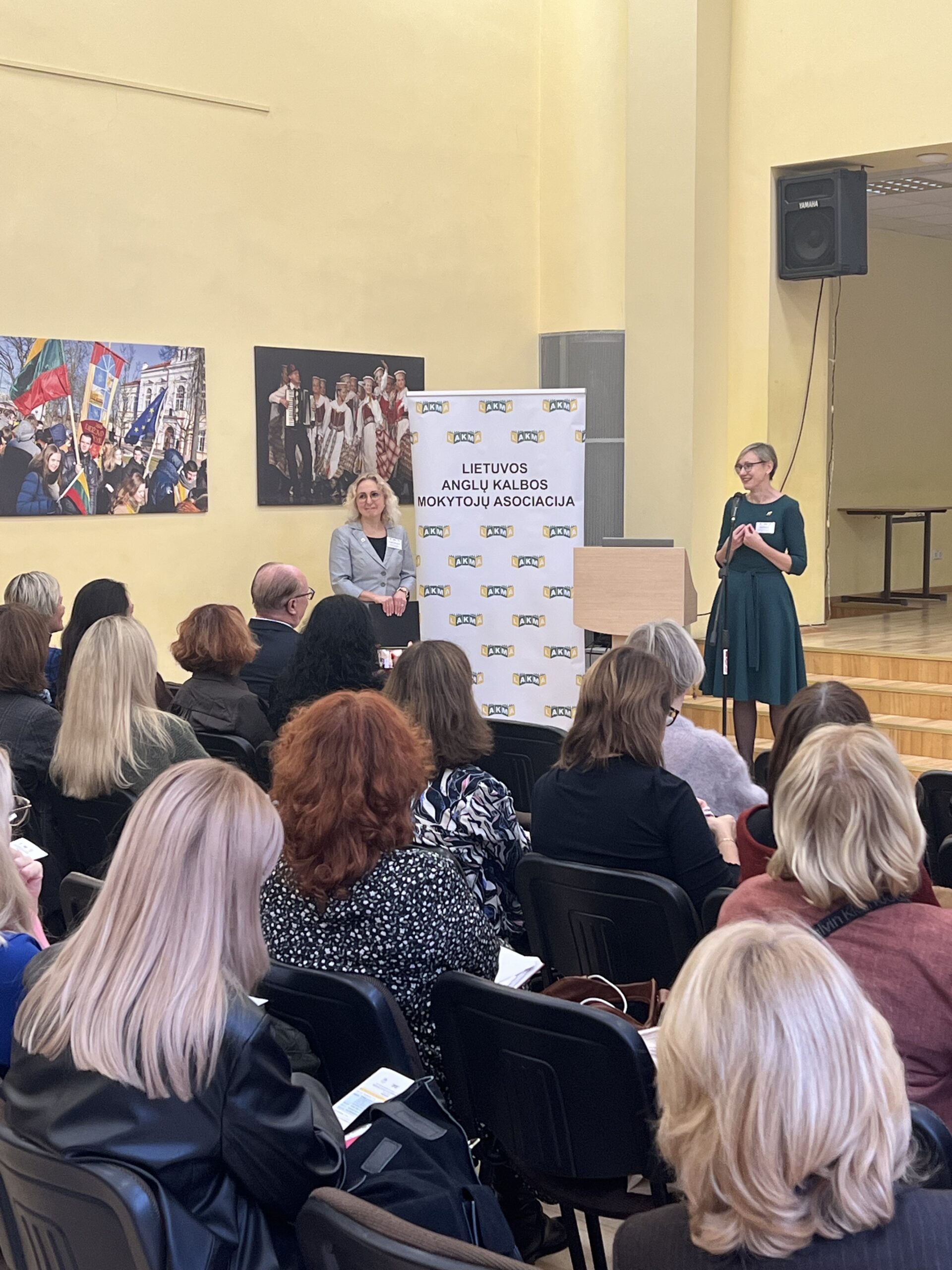
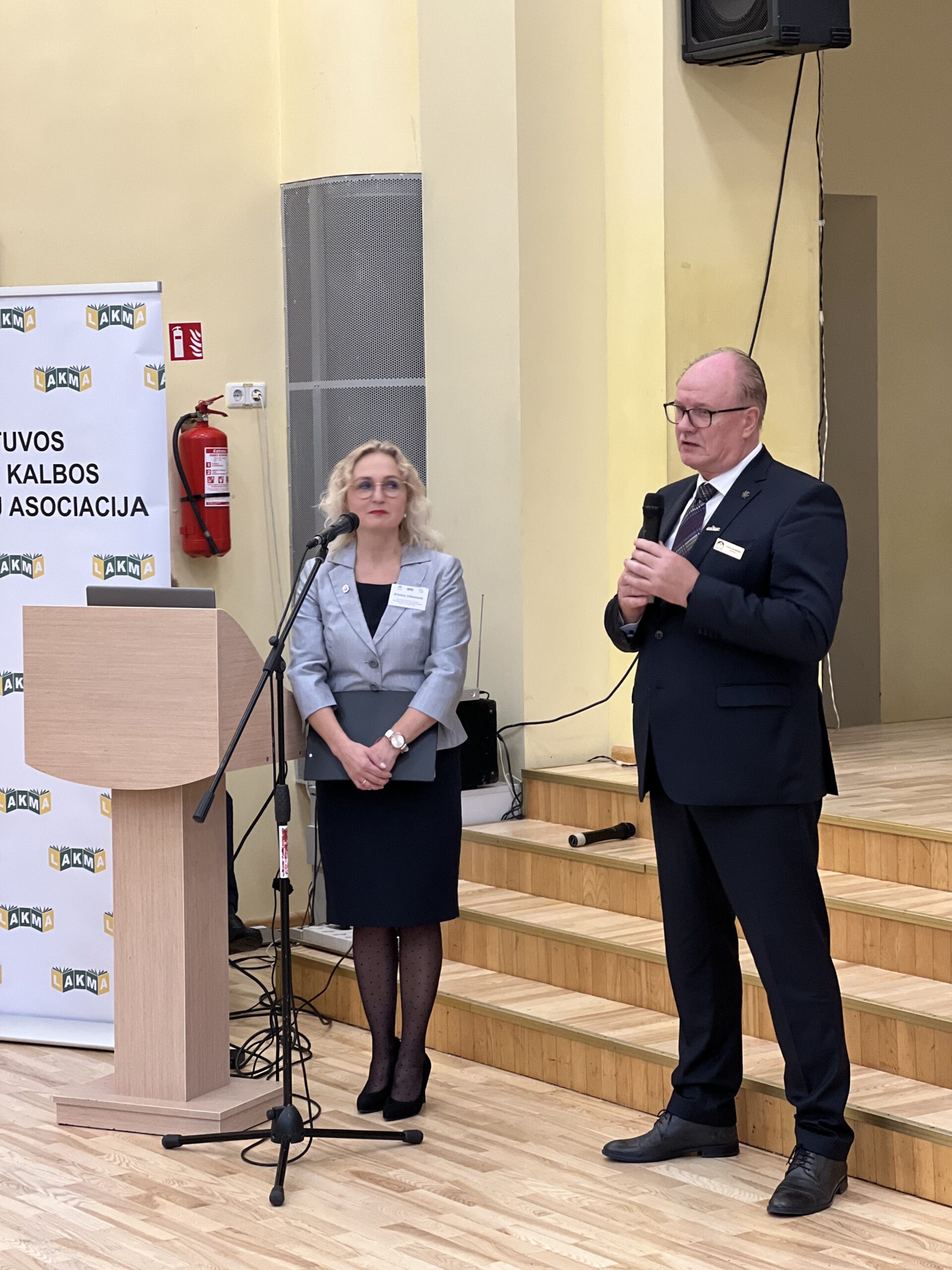
The conference was officially opened by Kristina Urbonienė, President of LAKMA and expert English teacher at Šiauliai Didždvaris Gymnasium, who welcomed participants and emphasized the relevance of the conference theme. Greetings were also extended by Vitalis Balsevičius, Headmaster of Šiauliai Didždvaris Gymnasium; Justinas Švėgžda, Vice Mayor of Šiauliai; Liz Boyles, Ambassador of the United Kingdom to Lithuania; and Asta Ranonytė, Deputy Director of the National Education Agency.
Plenary Sessions and Presentations
The opening plenary session featured Rob Howard, Vice President of IATEFL Poland, English language teacher, trainer, author, and international speaker. In his presentation, “The Best AI Technology for Your Classroom is You,” he emphasized that artificial intelligence can support but never replace the human qualities essential to effective teaching.
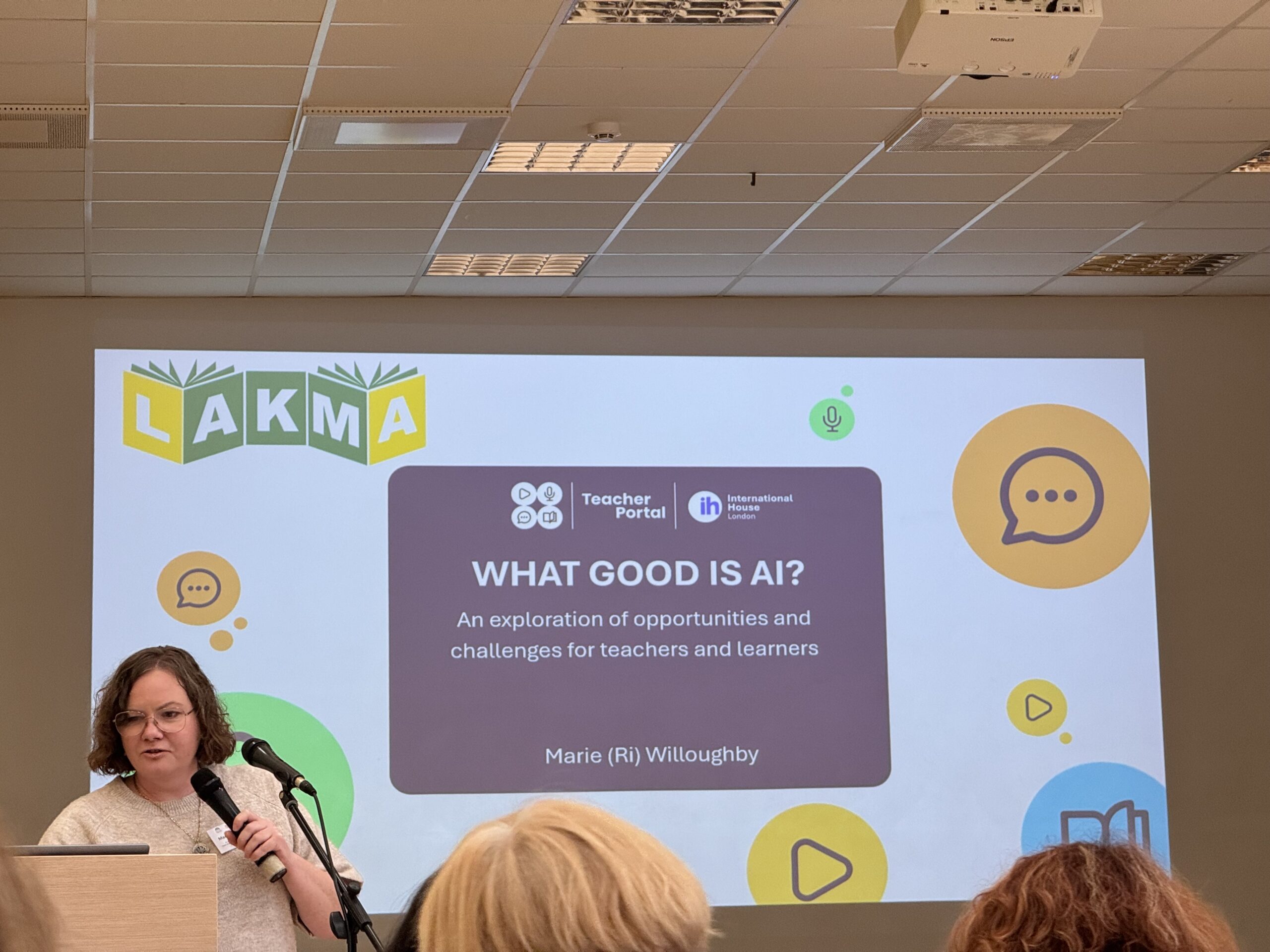
The second plenary session was delivered by Marie Willoughby, English language teacher and lecturer at International House London. Her talk, “What Good is AI? An Exploration of Opportunities and Challenges for Teachers and Learners,” explored how AI can be used to enhance teaching and learning while addressing the potential risks and limitations.
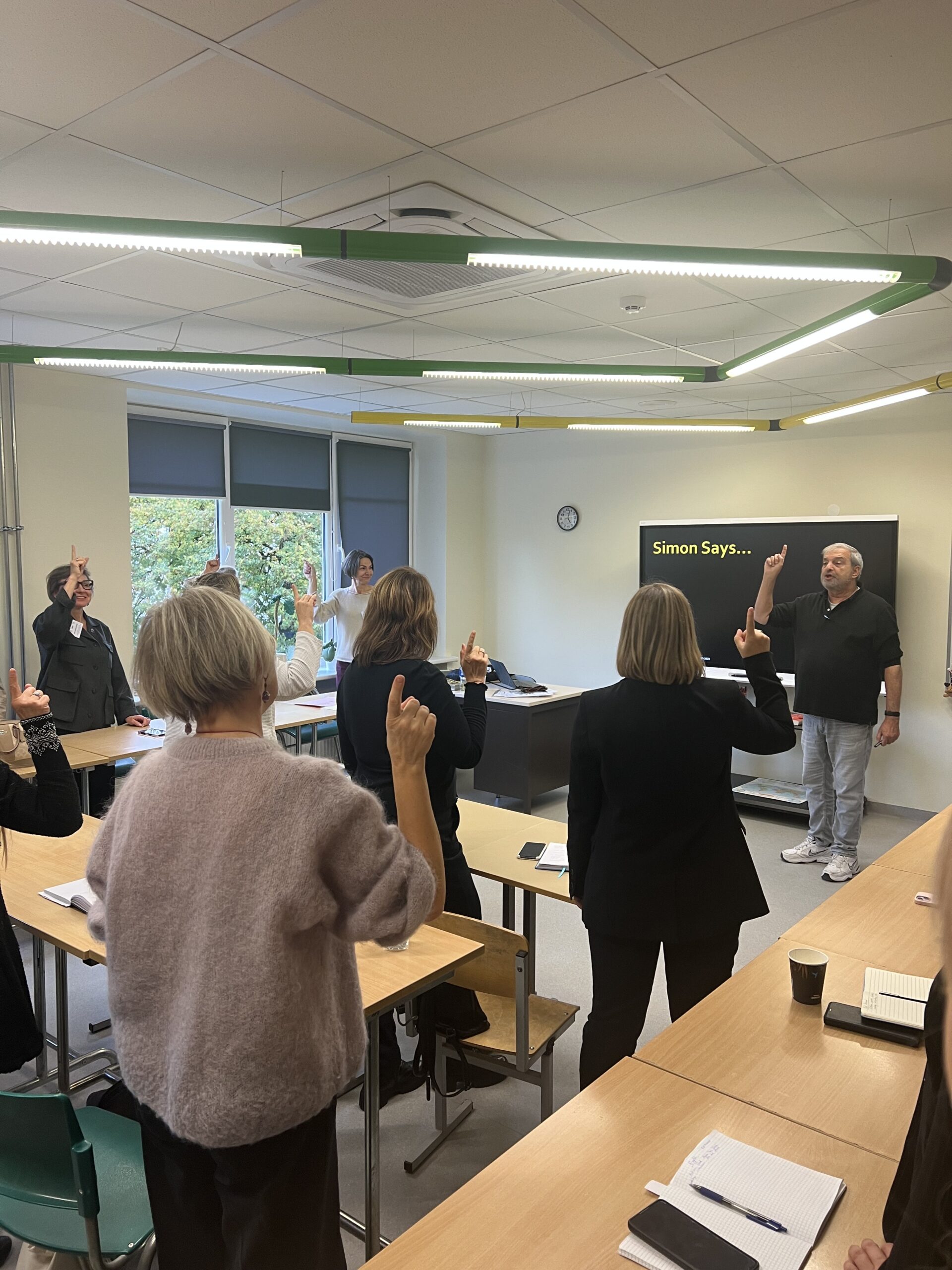
Following the plenary sessions, participants attended a series of presentations and hands-on workshops focusing on practical applications of AI in education. These sessions allowed teachers to explore various tools, discuss advantages and disadvantages, and share classroom experiences and examples.
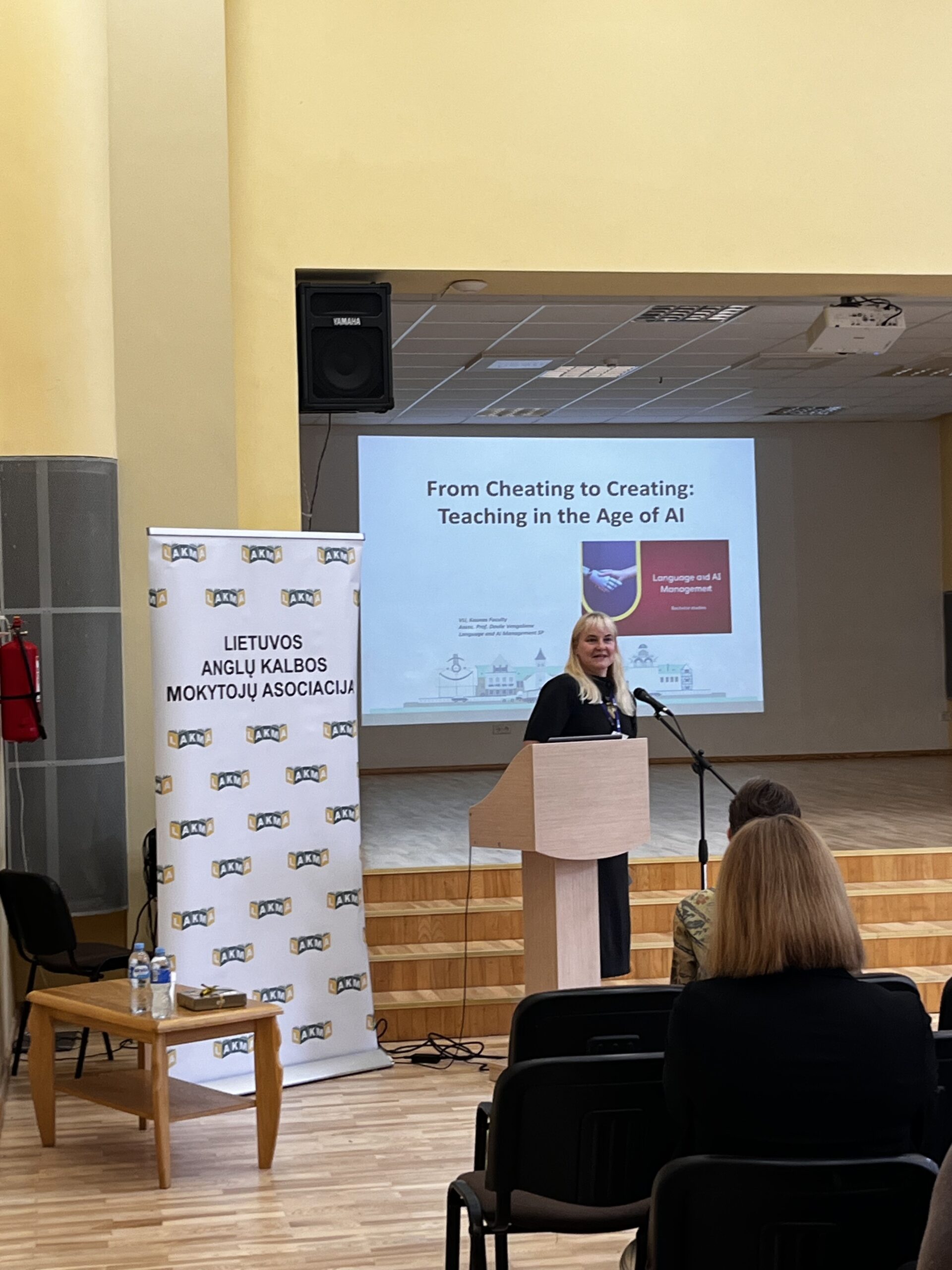
The day concluded with a plenary presentation by Dr. Dovilė Vengalienė, Associate Professor at Vilnius University, Kaunas Faculty. Her research illustrated current trends in the use of AI in higher education and examined cases of academic integrity and plagiarism.
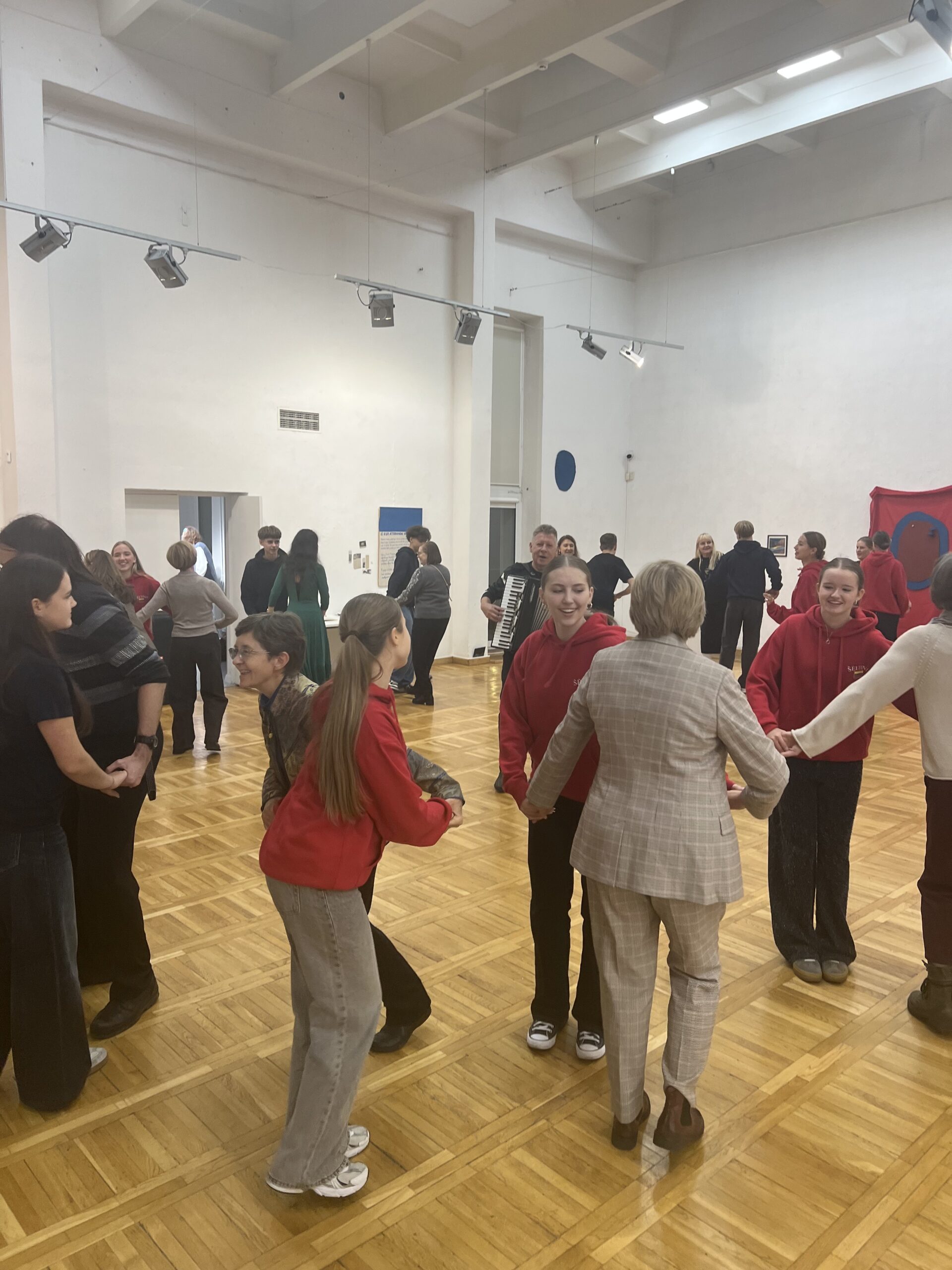
The first day ended with a formal evening reception at the Šiauliai Art Gallery, featuring a performance by the Šiauliai Didždvaris Gymnasium folk dance group “Šėltinis,” who invited participants to join in traditional Lithuanian folk dances. The evening concluded with a guided night tour of the Hill of Crosses, led by Justinas Švėgžda, Vice Mayor of Šiauliai.
Day Two Highlights
The second day began with a plenary session by Claire Dorman, Pearson representative and lecturer based in Spain, titled “Teaching in Tandem with AI: The Future of ELL.” Her presentation examined the evolving role of educators in an AI-augmented learning environment, offering both critical reflections and practical strategies for integration.
The day continued with additional presentations and interactive workshops that encouraged active engagement and professional exchange among participants. The conference concluded with the traditional raffle and a guided tour of the St. Peter and Paul’s Cathedral Tower. Participants expressed satisfaction and gratitude, emphasizing that the conference provided valuable knowledge and practical ideas to be shared with colleagues unable to attend.
Reflections and Acknowledgments
While concerns about the potential risks of artificial intelligence are being increasingly discussed, the conference highlighted the significant benefits that technological innovation can bring to education and professional development. It also reinforced the notion that scientific progress continues at an unprecedented pace, and it is the responsibility of educators to determine the extent to which AI influences teaching and learning. Above all, the conference affirmed the belief that human intelligence, empathy, and creativity remain irreplaceable.
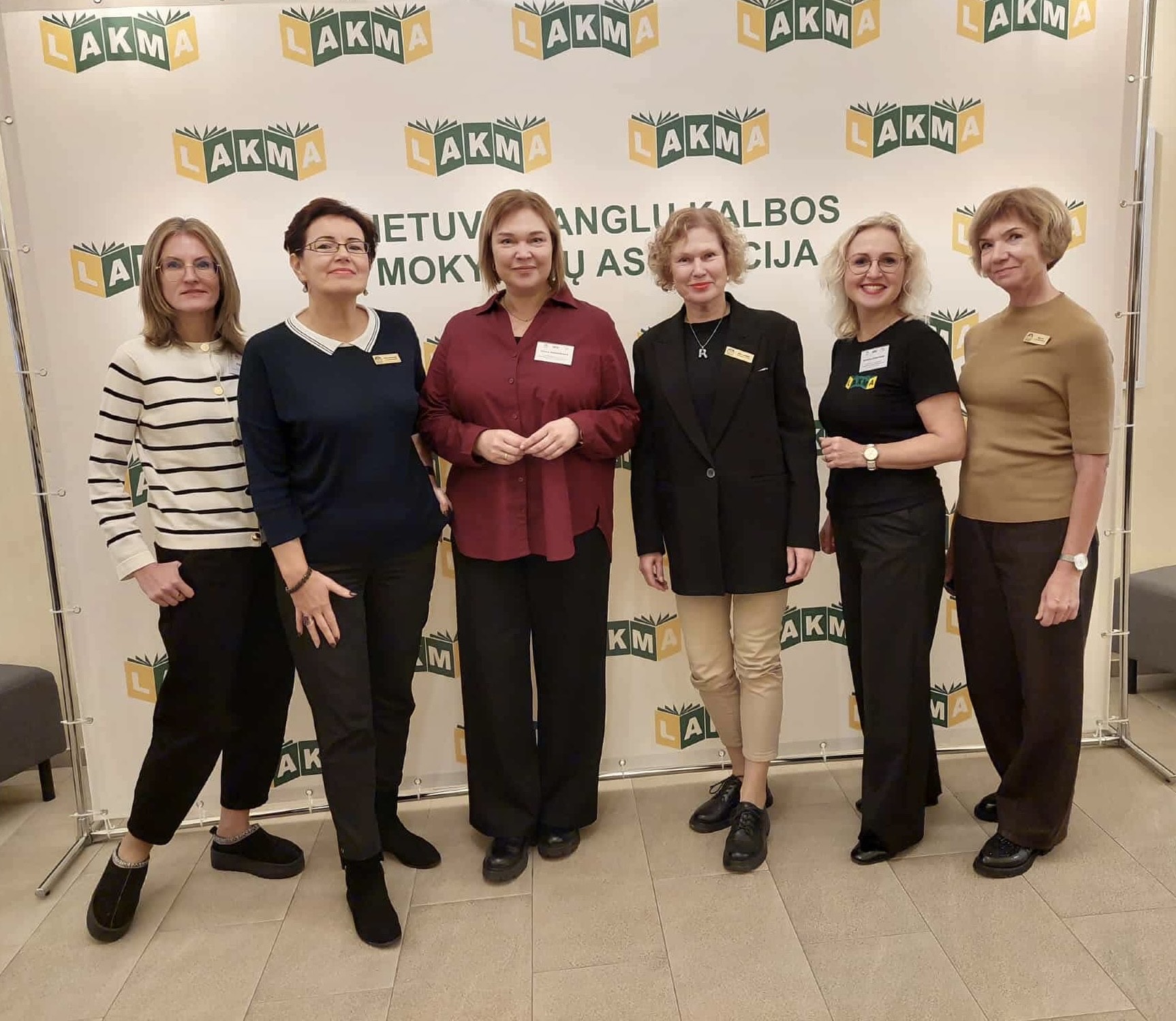
The LAKMA Board extends sincere gratitude to all the participants, speakers, partners, and sponsors: Šiauliai City Municipality, Šiauliai Didždvaris Gymnasium, the British Embassy in Vilnius, the British Council, the National Education Agency, the NGO SOL (Sharing One Language), for their cooperation and support and the publishers and bookshops: UAB Ames Education, Baltos lankos / Klett, Hamilton House, Humanitas, Krisostomus, Litterula, Macmillan Education, Pearson, and Rotas.
Sharing best practices remains an integral part of teachers’ professional growth. Through collaboration and mutual support, educators strengthen their professional community and empower their students to thrive in an ever-evolving world.
Kristina Urbonienė, LAKMA president
If you would like to read the article in Lithuanian, which was published on the Šiauliai Municipality website, please follow this link.