Kristina Urbonienė
LAKMA president
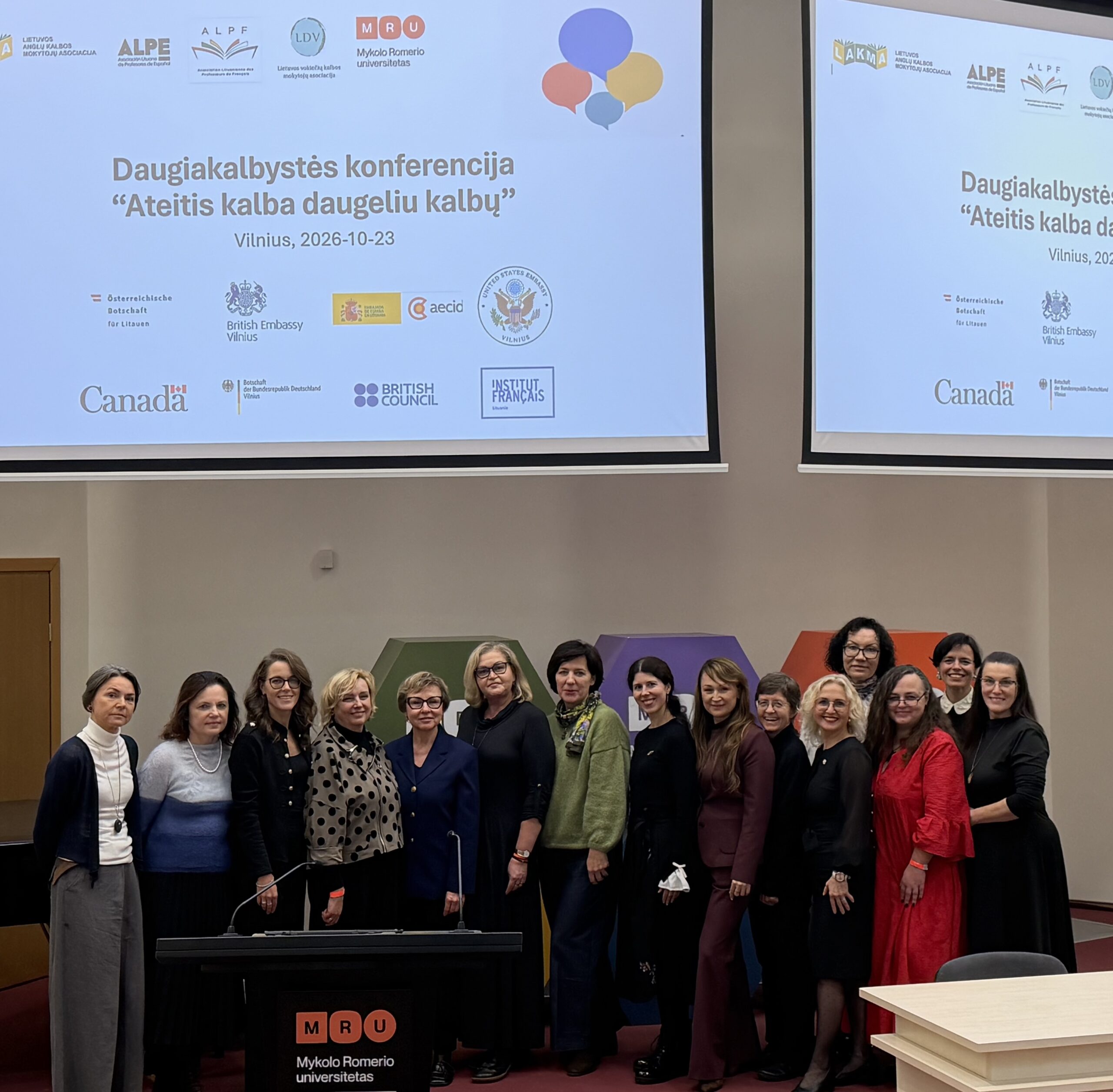
On 23 October 2026, Mykolas Romeris University in Vilnius hosted The Future Speaks Many Languages, a multilingual conference dedicated to promoting multilingualism, encouraging foreign language learning and strengthening the role of languages in education policy and society. The event brought together language teachers and lecturers, researchers, education experts, policymakers, representatives of language-teaching associations, diplomats and international cultural institutions to discuss how language education can respond to the needs and challenges of a changing world.
The conference was initiated by the Lithuanian Association of Teachers of English (LAKMA), the Lithuanian Association of Teachers and Lecturers of Spanish, the Lithuanian Association of Teachers and Lecturers of French, and the Lithuanian Association of German Language Teachers. Mykolas Romeris University was the conference partner. The organisers shared a commitment to highlighting language learning as an essential competence for personal development, cultural understanding, security, international cooperation and future opportunities.
Opening the dialogue on multilingualism
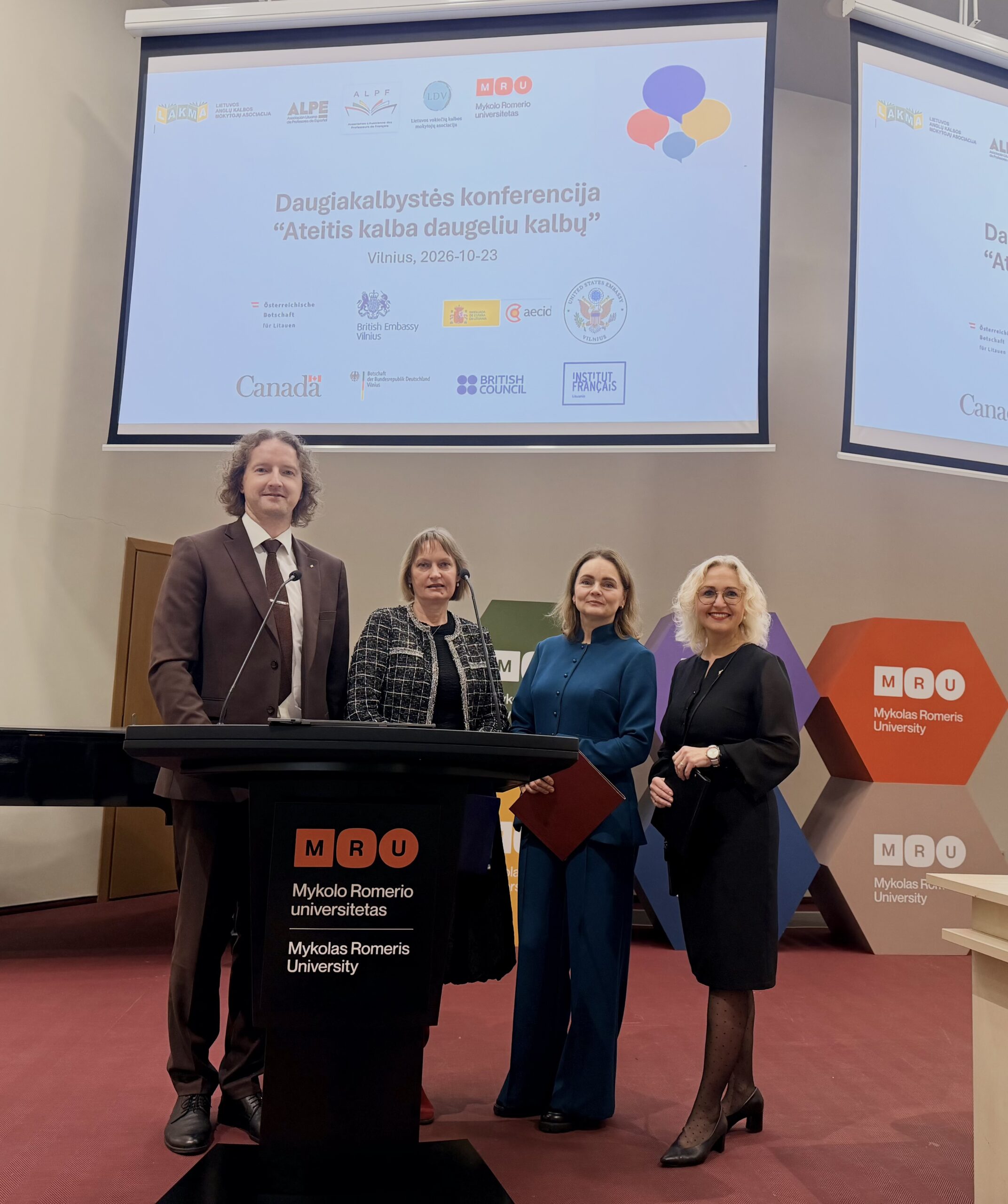
The conference opened with welcome addresses by Dr Eglė Malinauskienė, Vice-Rector for Research and Innovation at Mykolas Romeris University; Fernando Fernández-Aguayo, Ambassador of Spain to Lithuania; Christienne Carroll, Head of the Public Diplomacy Section at the U.S. Embassy; Dan Hunt, Deputy Head of Mission at the British Embassy; Barbara Schmidt, Minister at the German Embassy in Lithuania; Andre Ghione, Deputy Head of Mission of the Canadian Embassy in Lithuania; and Ona Marija Vyšniauskė, Director of the British Council in Lithuania. The presidents and representatives of the four organising language-teaching associations also addressed the participants: Kristina Urbonienė (LAKMA), Rima Sabaliauskienė (Lithuanian Association of Teachers and Lecturers of Spanish), Danutė Stankaitienė (Lithuanian Association of Teachers and Lecturers of French) and Edvinas Šimulynas (Lithuanian Association of German Language Teachers).
The morning programme continued with Jurgita Šukevičienė, Member of the Lithuanian Parliament, Chair of the Committee on Education and Science and member of the Committee on European Affairs. Sara Aškinytė, an education expert and member of the Švietimas #1 team, then presented Švietimo kelrodis (Education Roadmap).
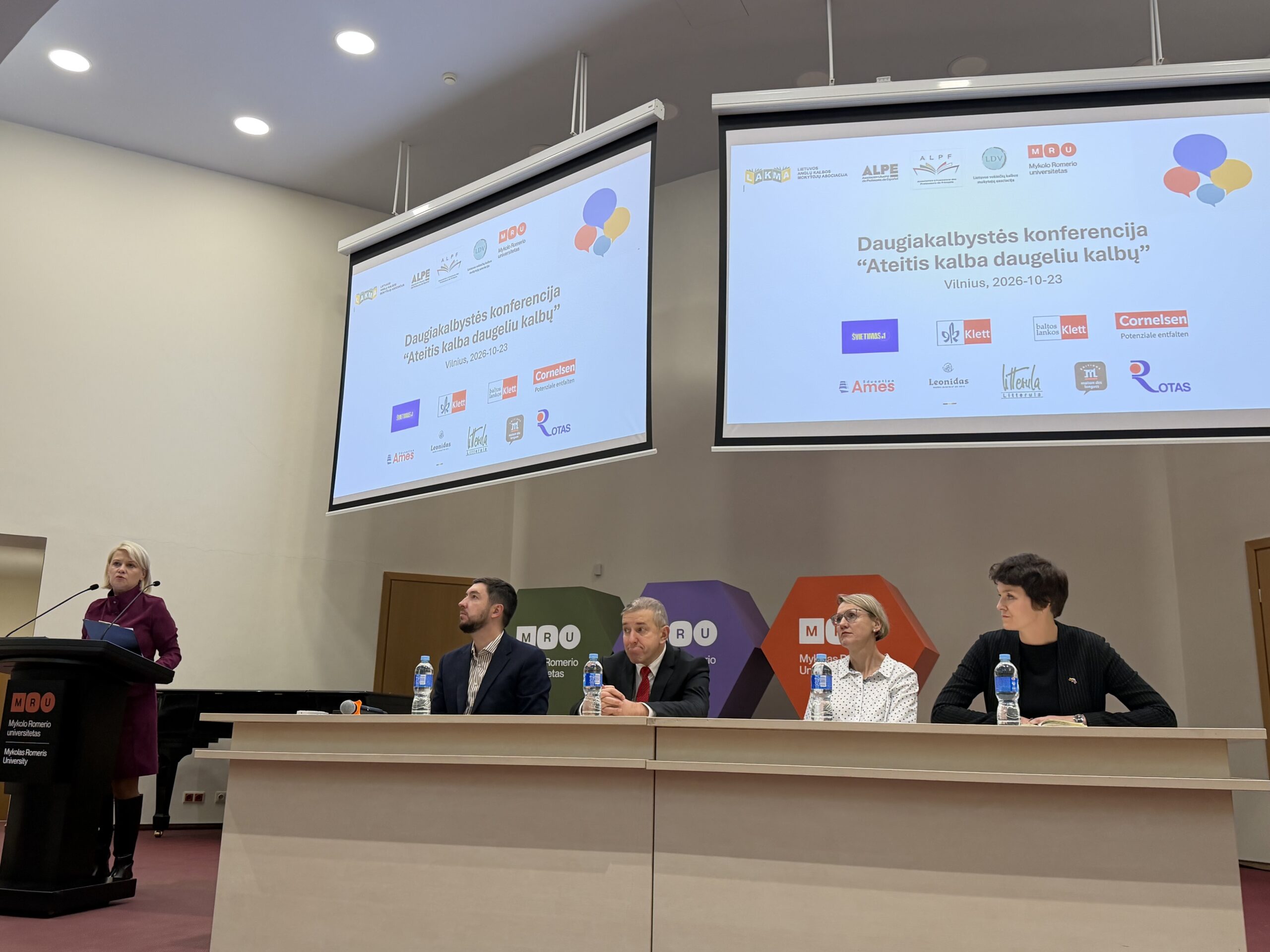
A central event of the morning was the panel discussion, Multilingualism in Lithuania: Opportunity, Necessity or Challenge? The discussion examined whether knowing several languages is still an individual advantage or has become an essential competence for learning, working, collaborating and participating in international life. The panel brought together Vytautas Mitalas, Deputy Mayor of Vilnius; Erikas Griškevičius, Head of the Curriculum Division in the Education Department of the Ministry of Education, Science and Sport; dr. Asta Ranonytė, Deputy Director of the National Agency for Education; and Ona Marija Vyšniauskė, Country Director of the British Council in Lithuania. The discussion was moderated by dr. Aina Būdvytytė, Šiauliai Romuva Gymnasium and the National Agency for Education.
Together, the keynote contributions and panel discussion highlighted the importance of coordinated action in education and public policy to ensure that linguistic diversity becomes a consciously nurtured resource for Lithuanian society.
Afternoon sessions: research, classroom practice and culture
The afternoon was devoted to parallel sessions in English, Spanish, French and German, giving participants opportunities to explore research findings, exchange teaching ideas and discover practical resources for language learning.
English-language sessions
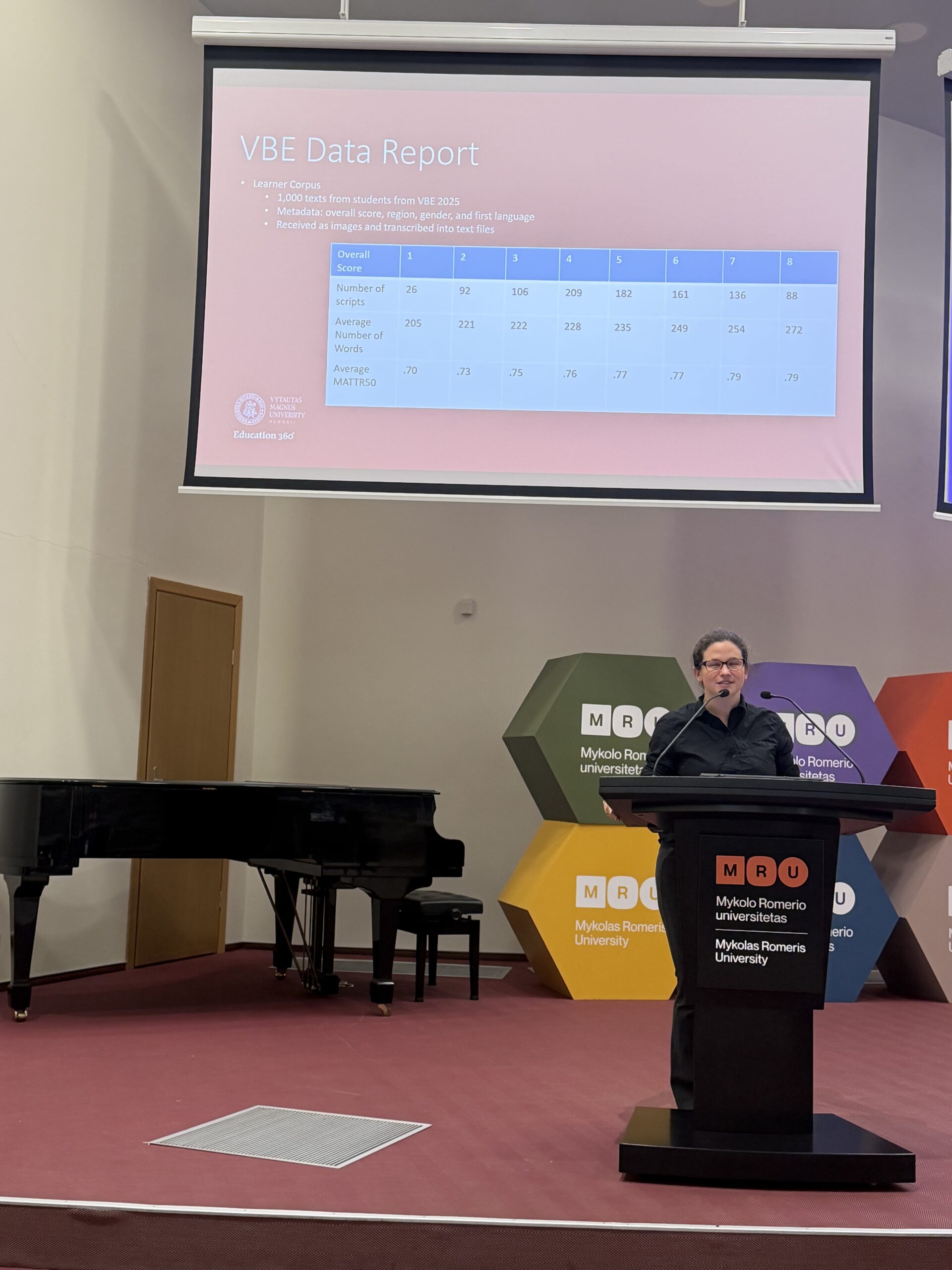
In the first session, Heather Godfrey Gaddis of Vytautas Magnus University Education Academy and Lancaster University presented Using Corpus-Based Methods to Support Exam Preparation. Her presentation explored how corpus analysis of Lithuanian students’ state school-leaving examination writing can reveal patterns associated with different levels of achievement. It also demonstrated how these findings can help teachers identify learners’ needs and design targeted classroom activities to support the development of writing skills.
In the second session, Ramunė Klimienė of Klaipėda Saulėtekis Progymnasium led Kaip formuojamasis vertinimas padeda mokytis? (How Does Formative Assessment Support Learning?). This practical workshop focused on formative assessment as an ongoing process that helps teachers understand learners’ progress, identify difficulties and provide meaningful feedback. Participants explored the cycle of learning objectives, success criteria, evidence of learning, feedback, reflection and next steps, including practical ways to use the LearnLab platform to support interactive tasks, self-assessment and learner reflection.
A shared commitment to the future of language education
By combining policy discussions, academic research, practical workshops and cultural experiences, The Future Speaks Many Languages created a platform for professional exchange across Lithuania’s language-teaching communities. The programme demonstrated that effective language education extends beyond grammar, vocabulary and examination results. It also involves intercultural understanding, learner autonomy, thoughtful assessment, the responsible use of technology and the ability to draw connections between languages.
For LAKMA and its partner associations, the conference reaffirmed the value of cooperation among language educators and the importance of ensuring that language learning remains a meaningful part of educational priorities and public debate. It offered participants both opportunities to reflect on the broader role of multilingualism in Lithuanian society and practical ideas to bring back to their classrooms.
The conference’s message was clear: investing in languages means investing in people, intercultural understanding and Lithuania’s capacity to participate confidently in an interconnected world. The future does not speak just one language – it speaks many.